
Revisiting old haunts, being moved by a stranger's story...
and other tales in globalising Delhi

When Rahul and I were dating, our favourite pastime was walking the streets of Delhi. We did not mind the broken pavements, nor the traffic and pollution. Perhaps because we were in love, we only saw the beauty of Delhi’s tree-lined roads, the vibrance of its quirky neighbourhoods and markets and the humanity of its vendors, touts and fellow pedestrians. I can still remember, almost as if it happened yesterday, the brilliance of a particular sunset viewed from atop the Safdarjung flyover, with birds flying across the orange-pink sky.
Of course, we each have a more prolonged association with the markets and streets of Delhi, from his school days here and from my five years studying architecture at the School of Planning and Architecture. But much has changed since the ‘90s, and now that we live in Gurgaon, every foray into a South Delhi market is a bittersweet nostalgia trip and a desperate search for any old hangouts that might have survived economic liberalisation and the spate of beautification and renovation projects in the capital city.
This morning, we happened to foray into Basant Lok market, which our generation forever associates with the iconic cinema Priya that, in our days, was one of the few that screened Hollywood films. I remember first coming here in 1994, when I started college in Delhi, on a “group date” that our college seniors sent us to [curiously, this involved pairing a bunch of us ‘freshers’ up and sending us on an independent outing into the city - I ended up as part of a trio because there were more girls than boys!]. We watched the hilarious Robin Williams film ‘Mrs. Doubtfire’, walking into the hall 20 mins late because we were all so new to the city that we had struggled to find transport to get us there in time!
As we walked through the market today, we rued the shutting down of TGIF (Thank God It’s Friday), one of the earliest diner-type chains in India, and the ‘Fact and Fiction’, a ridiculously well-stocked bookshop that I particularly loved back then. In contrast, my daughter waxed eloquent about boba cafes! Indeed, the market has transformed substantially, but not in the way that one would expect. The crowds and buzzing energy of the ‘90s, crooked paving and dinghy nooks notwithstanding, have been replaced by swank signages and emptiness. Priya was screening the latest Bollywood release; the cigarette stalls were neon-lit and shiny, and branded clothes stores, high-end restaurants, and cafes dotted the expanded and renovated market. Yet it was nearly deserted at lunchtime on a Sunday afternoon. I recalled meeting a friend here for dinner a few months ago and making similar observations about how empty the market was.
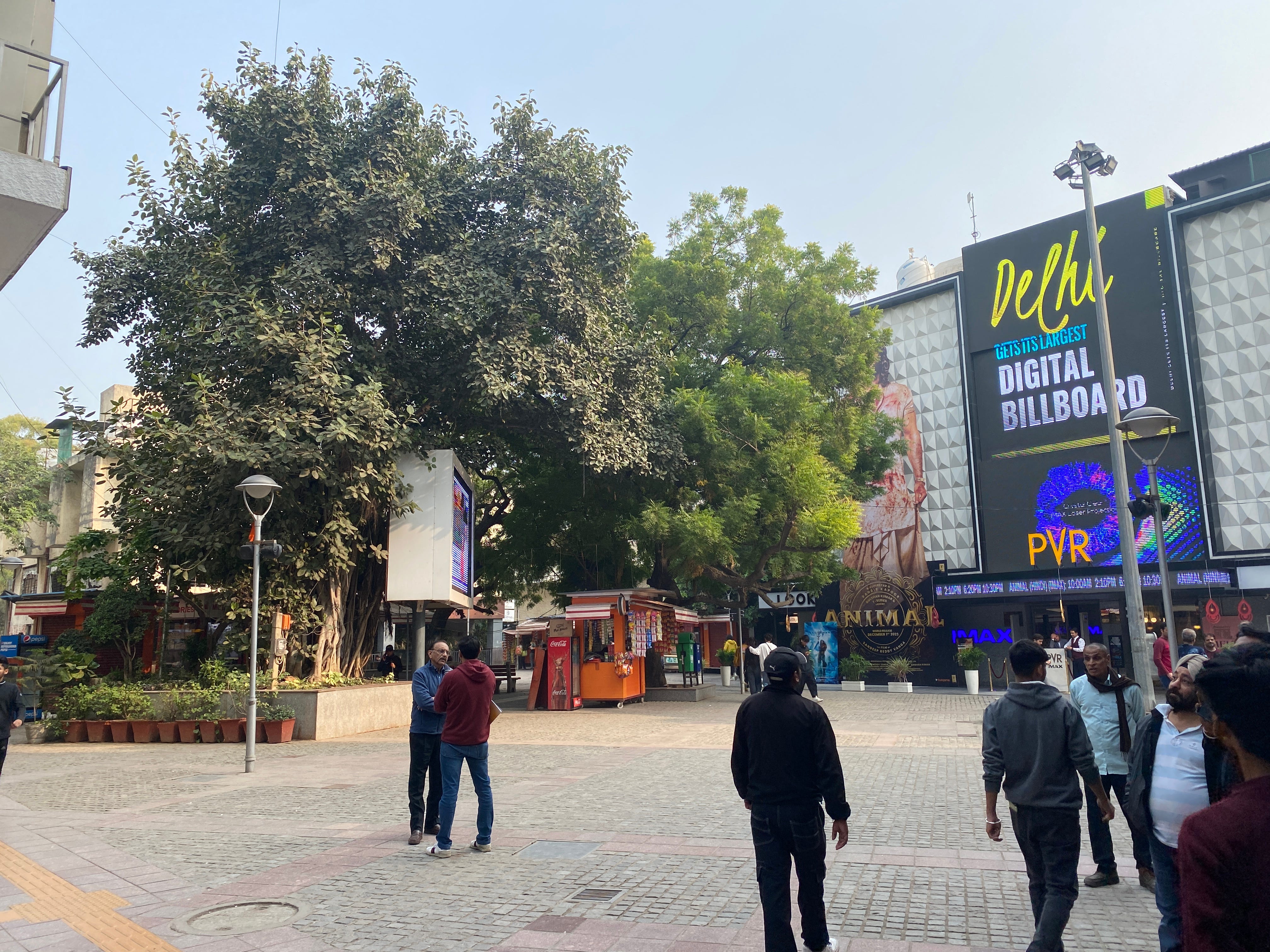
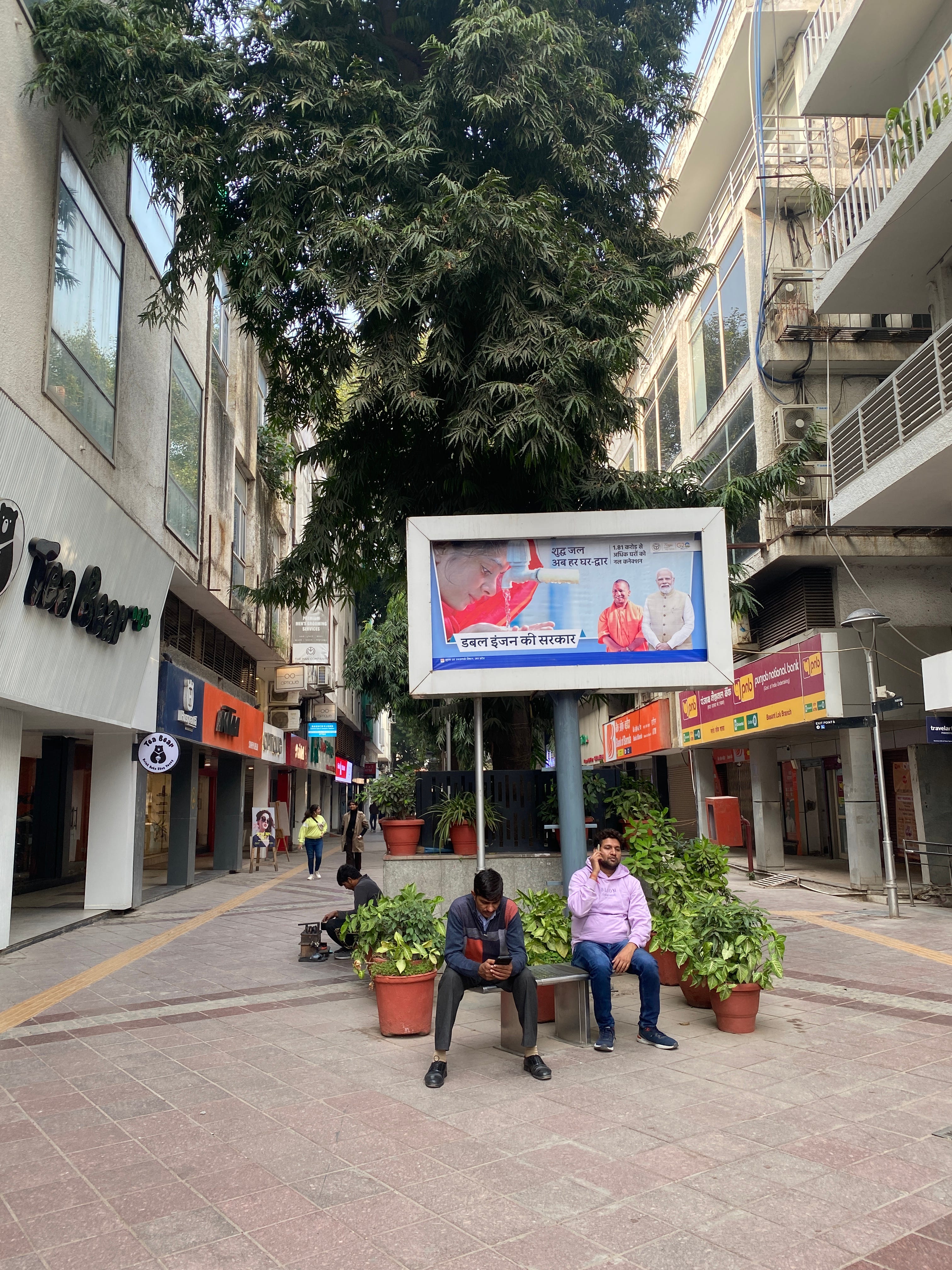
Perhaps the most interesting spaces in Delhi markets are their edges, where chai stalls and dhabas always have customers and where ill-dressed parking attendants handle expensive Mercedes and Audis more confidently than valets at Delhi’s 5-star hotels. As we looked for cash to pay for parking, the attendant gave us the wonderful news that his daughter had cleared the NEET, the all-India entrance test for medical college admissions. So emotional and excited was he that he told us about her dream of becoming a cardiologist motivated him to continue working despite poor health. In a nation obsessed with sons, this working-class gentleman’s faith in his daughter was heartening, but even more interesting was his abiding belief that holding women back had stalled India’s development! Reflective of the class complexities of urban India, his story was couched in words of gratitude. “Aap jaise logon ka aashirwaad hai” (because of the blessings of people like you), he said over and over again, reminding us not just of how real the struggle is, but of how social hierarchy is deeply ingrained in even the most aspirational sections of our society.
Delhi has changed dramatically since the ‘90s. The first global brands were just beginning to enter India then, while today, global luxury brands are common in the city’s shopping malls. Public spending has focused on sanitising and beautifying the city to make it 'world-class’, and this has involved wooing private investment and evicting slums from the city centre. Not unlike the spatial arrangement in Basant Lok market, Delhi is swankier and more prosperous than ever, and its poor are relegated to its edges.
Delhi’s spatial disparities exemplify the increase in income and wealth inequality in India since the 2000s. A recent UNDP report estimates that the top 10% of India’s population controls 65% of the total wealth, and the top 1% gets 22% of the national income. Any opportunity for upward mobility in this scenario is nothing short of miraculous. This is why the parking attendant’s story touched us so profoundly, and we wholeheartedly sent blessings to that brilliant girl who was dreaming a big dream and on her way to achieving it.
Delhi has seen lot of such transformations....
For me such a memory was Chankya hall which was one of the biggest theatres in Delhi for films. I remember watching my first English movie the -- Toy story. Now, when I go back I see a massive block which is a luxury mall and does not really ooze and character of its own!
such spaces stay etched in our memories but when they start morphing the picture in our head also starts to blur.
In a narrative that seamlessly weaves personal memories with societal observations, your post serves as a thought-provoking commentary on the multifaceted nature of urban life in Delhi.